


The pediatrician Emmi Pikler was born in Vienna in 1902 and devoted much of her work to child pedagogy. Her focus was particularly on the healthy development of young children up to the age of three.

In his approach to early childhood education, Pikler emphasized the importance of recognizing that each child has their own unique personality and therefore their own pace of learning and development. This pace should be accepted and not influenced. A child can learn something and retain it when they are ready. For this to happen, they need a sense of security in what they are trying to learn. According to Pikler, for healthy development, it is crucial that the child receives appropriate love and respectful treatment.
Pikler pedagogy was divided into 3 aspects :
- Care and communication
- Movement development
- Free play
Care and communication:
Daily childcare is the time when the child is given the closest possible connection. During this time, trust can be built particularly well through loving and respectful interaction.
Communication is crucial at this stage. Even if the child doesn't yet understand what's being said, they actively perceive what's happening around them. During this initial phase, you can describe and demonstrate what's being done. Over time, the child can participate and help you until they can complete the procedure independently.
Tip: To help your child learn tasks and actions more quickly, it can be helpful to establish a specific sequence and routine for these actions. This will make it easier for the child to remember the different steps.
Motor development: 
In terms of motor development, the child is able to develop completely without any help.
It starts to roll over when it's ready. This also applies to crawling and standing up.
Walking, etc. In the first months of life, children primarily occupy themselves with their hands.
They are not yet thinking about transportation.
Once they are ready to explore their surroundings, they begin to learn the necessary movements and postures.
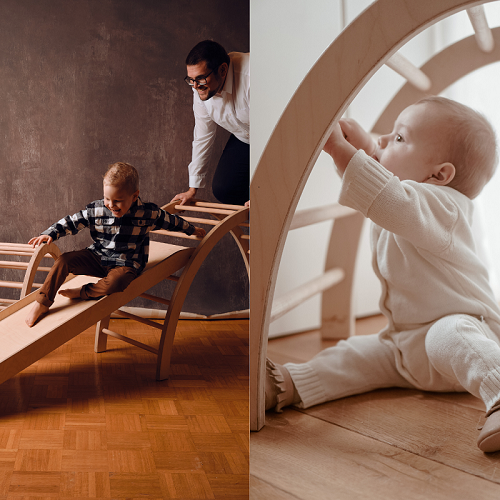
Tip: The child should be given the time they need to develop accordingly. Even if you don't want to actively intervene in this process, you can create incentives for the child, such as placing a ball next to them that they can only reach by turning towards it. Or a climbing arch that the child can later use to pull themselves up to a standing position.
Free play:
During free play, imagination plays a vital role. Free play is meant to allow children to express themselves. Using their imagination and perhaps some objects, children can experience and invent all sorts of adventures. Toys like climbing arches also offer the opportunity to explore and develop their motor skills. They should be given as much freedom as possible to develop their own potential.
Here, it is permitted and even desirable for children to receive suggestions and assistance from parents and educators.

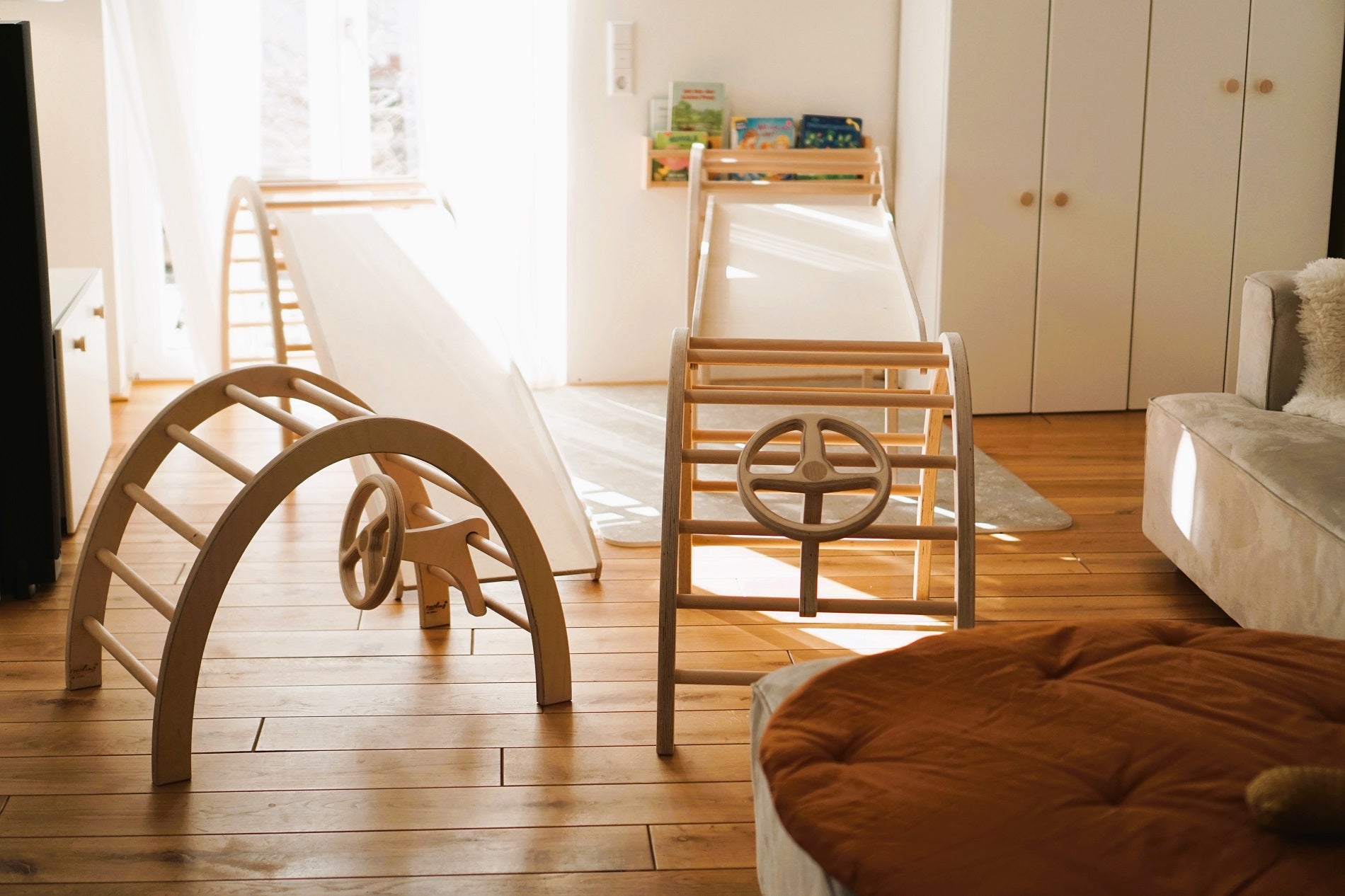
Our climbing arches, which are also built according to the Pikler principle, can support your child in free play:
- The sense of balance is strengthened by climbing over the arch.
- Grip motor skills are improved
- The arches can serve as support and stability, for example during the first attempts at walking and standing.
- Children can pull themselves up on the arches.
- This gives free rein to the imagination. For example, the steering wheels can be used to drive various vehicles, and the arches and slides can be used to build caves or castles.
Further information can also be found on the following page: https://starkekids.com/emmi-pikler/

Leave a comment
This site is protected by hCaptcha and the hCaptcha Privacy Policy and Terms of Service apply.